Staircase-Only Moves in Marylebone: Pricing & Risk Factors
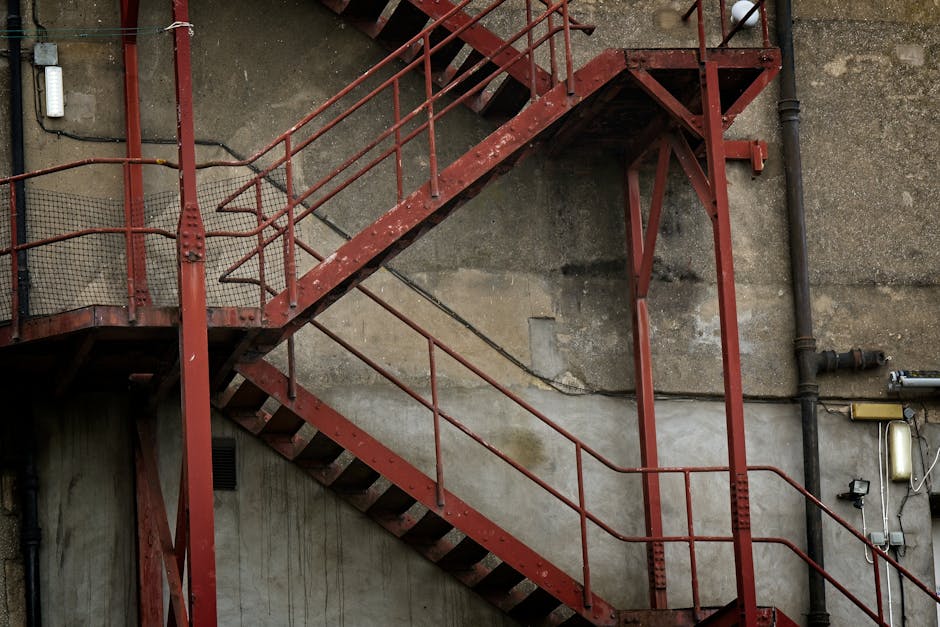
Staircase-only moves in Marylebone can look straightforward on paper, then turn up on moving day and behave very differently. A narrow townhouse stairwell, a tight bend on the landing, a heavy wardrobe that barely fits the width of the banister - suddenly the job is slower, riskier, and more expensive than a lift-assisted move. If you are comparing quotes or trying to work out what fair pricing looks like, this guide breaks down Staircase-Only Moves in Marylebone: Pricing & Risk Factors in plain English, with the practical details that matter in real life.
You will learn what makes these moves distinct, why the staircase changes the cost, where the main risks come from, and how to reduce the chance of damage, delays, or surprise fees. We will also look at the kinds of services that help, including man and van support for awkward access moves and clear pricing and quotes for planning ahead. Let's face it: when the only route is up and down the stairs, the move needs a bit more thought.
Key takeaway: staircase-only moves are priced less like a simple transport job and more like a carefully managed access challenge. The stair shape, item size, crew size, and time on site all matter.
Marylebone adds its own flavour to the mix. Older buildings, elegant but cramped common areas, busy streets, and resident sensitivity all affect how the work is done. That does not mean the move has to be stressful. It just means a good plan is worth its weight in tea and tape.
Table of Contents
- Why Staircase-Only Moves in Marylebone: Pricing & Risk Factors Matters
- How Staircase-Only Moves in Marylebone: Pricing & Risk Factors Works
- Key Benefits and Practical Advantages
- Who This Is For and When It Makes Sense
- Step-by-Step Guidance
- Expert Tips for Better Results
- Common Mistakes to Avoid
- Tools, Resources and Recommendations
- Law, Compliance, Standards, or Best Practice
- Options, Methods, or Comparison Table
- Case Study or Real-World Example
- Practical Checklist
- Conclusion
- Frequently Asked Questions
Why Staircase-Only Moves in Marylebone: Pricing & Risk Factors Matters
The phrase "staircase-only move" sounds simple, but it hides a lot of operational detail. In practical terms, it means items must be carried via stairs because there is no usable lift, the lift is too small, or the lift cannot be used for the load. That one detail can change everything: labour time, the number of people needed, the equipment required, and the likelihood of accidental damage.
In Marylebone, this matters even more. Many properties have narrow staircases, awkward turns, shared entrances, protected period features, or just a lot of foot traffic. A move that would be quick in a newer building can become a careful, slow procession through a tight staircase with corners that seem to have been designed by someone who hated wardrobes. A little dramatic? Maybe. But not by much.
Pricing becomes important because customers often expect the price to reflect transport distance alone. In reality, the access route may be the biggest cost driver. A short local move can still be labour-heavy if the team has to carry everything down three flights of stairs. That extra handling increases risk, so reputable firms typically account for it up front rather than leaving it to chance.
There is also a trust element. When you understand the risk factors, you are better placed to judge whether a quote is realistic. If one quote seems unusually low, it may not include enough labour time, protective equipment, or contingency for tricky access. And if a quote is unusually high, it may be carrying extra risk that has not been explained clearly. Either way, knowledge helps.
For many households and small businesses, staircase-only access is not a deal-breaker. It is just a variable. But it is a variable that should be named early. That alone can save a lot of back-and-forth later.
How Staircase-Only Moves in Marylebone: Pricing & Risk Factors Works
A staircase-only move is usually priced by looking at the full job rather than a single flat rate. The mover will consider what needs to be carried, how far it must be carried, how difficult the staircase is, and whether the items need special handling. The more awkward the route, the more time and care are needed.
Here is the basic logic most people can understand:
- Assessment of access - the team checks the staircase, landings, entrance width, and any obstacles.
- Item review - bulky furniture, appliances, fragile boxes, and anything unusually heavy are flagged.
- Labour planning - the mover estimates how many people are needed to carry safely and efficiently.
- Protection planning - floor runners, blankets, straps, corner protection, and wrapping may be prepared.
- Timing estimate - the move is given enough time to allow for careful lifting and turning.
- Risk pricing - the quote reflects the chance of delay, damage, or extra handling effort.
That final point is the one people sometimes miss. Pricing is not only about effort already visible. It also reflects what could go wrong if the stairs are tighter than expected, if a sofa catches on a bend, or if the building needs extra protection. A good mover is not guessing wildly; they are pricing the likelihood of a slower, more controlled move.
If you are trying to compare quotes, ask what the stair access assumption is. Does the quote assume easy turning space? Two movers or three? Ground-floor parking nearby or a longer carry from the vehicle? Small details, big difference.
There is also a useful distinction between "carrying upstairs" and a true staircase-only move. Some jobs just happen to involve stairs. Others are defined by stairs being the only feasible route. The latter tends to carry more risk because there is no fallback option if the item does not fit. You cannot simply "take the lift instead". The stairs become the whole plan.
Key Benefits and Practical Advantages
Despite the extra effort, staircase-only moves can still be the right solution. In some cases, they are the safest and most realistic choice. If handled well, they bring several practical benefits.
- No need for expensive special equipment in many cases, especially where access is already tight but manageable.
- Flexible scheduling because the move can often be arranged around building rules or residential timings.
- Better control over fragile items since pieces are carried manually and handled with care.
- Lower risk of lift misuse when a lift is too small, too slow, or not appropriate for the load.
- Suitable for single-item or partial moves such as a sofa, bed frame, desk, or a few boxes.
One practical advantage is predictability. A staircase-only move sounds harder, yet in experienced hands it can be more controlled than a half-baked lift move with repeated attempts. You know the route. You know the turn points. You can prepare the team and the property around that route.
It also helps with organisation. If the staircase is the only path, the mover tends to work methodically: wrap first, measure mentally, carry in the right sequence, and avoid random wandering between rooms. It is not glamorous, but it works.
For homes in Marylebone, where hallways can be compact and communal areas are often shared, this level of control matters. Neighbours appreciate a move that is neat, quiet-ish, and done without unnecessary bumps on the railings. That sounds obvious, yet it is often what separates a decent experience from a stressful one.
Who This Is For and When It Makes Sense
Staircase-only moves are not just for large households. They are common in smaller, more specific situations too. If any of the following sounds familiar, this kind of move may be the right fit:
- You live in a period flat with no lift.
- The lift exists, but it is too small for furniture.
- The lift is out of service or unreliable.
- You need to move heavy furniture to or from an upper floor.
- You are shifting part of a home rather than relocating everything.
- You are moving office items within a building with stair-only access.
It makes sense when the item count is manageable and the staircase route is safe. A move of a few bulky pieces can be handled efficiently if the crew knows what to expect. On the other hand, if you are moving large appliances, fragile antiques, or unusually heavy furniture with awkward geometry, the risk picture changes quickly. That does not mean it cannot be done. It means the plan needs to be sharper.
Some people also use staircase-only moves alongside broader services. For example, after a home move or office relocation service, there may be a few items that can only be carried by stairs. Others may pair it with packing and unpacking support so everything is wrapped properly before the first lift. That combination can make a stubborn access problem feel a lot less daunting.
Truth be told, the people who benefit most are usually the ones who plan early. If you leave staircase access to the last minute, it becomes a headache. If you treat it as part of the move from day one, it becomes just another job to manage.
Step-by-Step Guidance
If you want a cleaner move and fewer surprises, follow a simple process. This is the part that saves real stress, not just a nice-looking quote.
1. Measure the staircase route properly
Do not rely on guesswork. Measure the width of the narrowest point, the height of low ceilings or landings, and any tight corners. A tape measure is useful, yes, but also stand there and picture the item turning on the landing. If it looks awkward to you, it may be awkward for the team too.
2. Identify the heaviest and largest items
List the awkward pieces first: wardrobes, sofas, beds, white goods, desks, and anything with a strange shape. A good mover can often work around boxes. It is the stubborn shapes that tend to slow things down.
3. Confirm whether the route is truly staircase-only
Sometimes there is a lift, but it is unusable for large loads. Sometimes the lift is theoretically available but too small to help much. Make sure the mover knows which applies, because that affects pricing and staffing.
4. Request a quote based on access, not just distance
Ask for a quote that reflects the staircase, floor level, and item list. A local move across Marylebone can still need more labour than a longer move with easier access. That catches people out all the time.
5. Prepare the property before the crew arrives
Clear the landing, remove loose mats, protect delicate surfaces, and give yourself space near the door. It sounds basic because it is basic - and basic things are the ones people forget when they are rushed.
6. Pack and wrap with the staircase in mind
Boxes should be manageable, not overfilled. Furniture should be wrapped to protect corners and surfaces. If you have items that need separate handling, say so early. A move is easier when the crew does not have to discover the tricky part halfway down the stairs.
7. Build in a little time margin
Staircase-only moves are more sensitive to delay than simple ground-floor jobs. A five-minute snag can become a twenty-minute one. It happens. So allow slack in the timetable, especially in central London where parking and access can be a bit lively.
8. Check insurance and responsibilities in writing
Make sure you know what the mover covers, what your responsibilities are, and how claims or damage concerns are handled. Better to read that before the day than after a wobble on the stairs.
Expert Tips for Better Results
These are the sorts of things that make a noticeable difference on the day. Small details, but they add up fast.
- Use smaller boxes than you think you need. Overpacked boxes are the enemy of safe stair carrying.
- Label fragile items clearly. A quiet landing is nice; a smashed lamp is not.
- Keep the staircase clear from the start. Shoes, coats, umbrellas, prams, and random hallway clutter all slow the team down.
- Protect corners and banisters early. Don't wait until the first scrape.
- Choose a start time that avoids the busiest building traffic. In some Marylebone blocks, that can make a surprisingly big difference.
- Be ready to answer access questions quickly. The more precise your answers, the better the estimate.
One practical tip that often gets overlooked: photograph the staircase and the item together if possible. Not for drama. Just for clarity. A picture can show proportions and turning space much better than a rushed phone call while you are standing in the hallway with a kettle boiling somewhere behind you.
Another useful habit is to think in terms of route, not item. Where will the item enter? Which way will it turn? Where does it pause? This kind of route thinking sounds a little obsessive, perhaps, but it is exactly what avoids awkward moments halfway through a carry.
And if the mover suggests a second person or more protection than you expected, ask why. Usually there is a sensible reason. Sometimes they are being cautious; sometimes they have seen enough staircases to know better. Fair enough, really.
Common Mistakes to Avoid
Most issues with staircase-only moves are preventable. The trouble is, people tend to realise the mistake only once the item is already leaning at an uncomfortable angle on the stairs.
- Assuming all quotes are comparable. One quote may include enough labour and protection; another may not.
- Underestimating item size. A sofa that looks fine in the room may be a nightmare on the landing.
- Forgetting about turning points. The narrow bit is not always the staircase itself. Sometimes it is the bend.
- Overpacking boxes. Heavy boxes are harder to carry and more likely to split.
- Not mentioning fragile or awkward items. Silence is not a good strategy here.
- Leaving access prep until the movers arrive. That is how delays begin.
- Ignoring building rules. Some properties have sensible timing expectations, and you do not want to be improvising at the door.
Another common issue is treating damage risk as abstract. It is not abstract. Stair rails, painted walls, carpet edges, light fixtures, and front-door thresholds are all real surfaces that can be scuffed if the team is rushed. You do not need to panic about it. Just respect it.
If you are unsure whether something will fit, say so before the move. That one conversation can save a lot of awkward lifting and a bit of swearing under the breath. Human beings, honestly.
Tools, Resources and Recommendations
You do not need specialist equipment for every staircase-only move, but a few practical tools make the job much easier and safer. The right setup depends on the item and the staircase, yet these are the common helpers:
- Measuring tape for stair width, item dimensions, and landing clearance.
- Furniture blankets for protection against scuffs and knocks.
- Straps to keep the carry controlled.
- Corner guards and floor runners for protecting the property.
- Wrapping materials for delicate or polished surfaces.
- Gloves with grip to help with safe handling.
From a planning point of view, it helps to use the kind of service that understands awkward access. A flexible man with van service can be a sensible fit for smaller, access-heavy jobs, while larger or multi-item moves may benefit from a moving truck option or even removal truck hire if the overall load is bigger. The key is matching the vehicle and crew to the staircase, not forcing the staircase to suit the vehicle.
For customers who want a fuller understanding of how a company approaches planning, it is also worth looking at their about us information and insurance and safety guidance. Those pages can help you judge whether the business takes care, transparency, and responsibility seriously. That is never wasted time.
Law, Compliance, Standards, or Best Practice
Staircase-only moving itself is not a separate legal category, but good practice matters a great deal. In the UK, anyone moving heavy items should work with safety in mind, use suitable handling methods, and avoid creating unnecessary damage or risk to people and property. That is just sensible trade practice, and in a shared building it is also common courtesy.
For movers, this usually means planning the route, communicating clearly, using enough staff, and protecting the property where needed. For customers, it means giving accurate access information, disclosing awkward items, and following any building arrangements that apply. Simple enough, though not always simple in a lived-in flat at 8am.
It is also sensible to review the company's own policies where available. A serious mover should have clear guidance on health and safety, payment and security, and complaint handling via a documented complaints procedure. If they publish this kind of information, it often suggests a more structured operation.
Best practice in Marylebone also means respecting shared access. Many buildings have residents, visitors, and delivery traffic passing through the same space. Keeping the stairwell clear, moving efficiently, and avoiding unnecessary noise or obstruction is not just polite. It helps the job go smoothly, which is usually what everyone wants.
Options, Methods, or Comparison Table
Not every staircase-heavy job needs the same approach. The best option depends on item size, access difficulty, and how much you need done in one go. Here is a simple comparison to help you think it through.
| Approach | Best for | Typical strengths | Main limits |
|---|---|---|---|
| Single-item staircase move | One bulky item, such as a sofa or wardrobe | Fast to organise, easier to price, focused handling | Not ideal if there are many items or very awkward turns |
| Small van with two movers | Light-to-medium loads and tight residential access | Good balance of cost and control, often flexible | May need more time if access is especially tight |
| Larger removal vehicle | Multiple rooms or heavier household loads | Better for fuller moves, more carrying capacity | Parking and access planning become more important |
| Full packing and moving support | Busy households, fragile items, time-sensitive moves | Less stress, better item protection, smoother handover | Higher overall cost, but often worth it |
There is no universal winner. A small staircase-only job can be best handled with a compact team and vehicle. A more complex move may need extra hands and protection. If you are in doubt, ask the mover to explain which method they would use and why. A decent answer should sound practical, not vague.
Case Study or Real-World Example
Imagine a second-floor flat in Marylebone with a narrow staircase, no usable lift, and a large sofa that needs to come out before a new one goes in. The stairs are clean but tight, the landing turns sharply, and the front door opens into a corridor that cannot be blocked for long.
In a case like this, the mover would usually confirm the sofa dimensions, check whether the arms or legs can be removed, and decide how many people are needed to carry it safely. They may bring extra protection for the walls and railings. If the sofa is borderline for the staircase, they might suggest a two-person carry plus careful tilting rather than forcing the angle. Not exciting. Very effective.
Now compare that with a job that includes a bed frame, mattress, and a heavy chest of drawers. Even if the route is the same, the risk profile changes because there are multiple items, each with its own handling issues. The quote would likely reflect more labour time, more wrapping, and more opportunity for delay. That is exactly the sort of situation where a slightly higher price may actually be the better value.
What people usually notice afterwards is not just that the items arrived or left successfully. They notice the calm. The stairwell is intact, the move is finished without drama, and nobody has had to play furniture Tetris under pressure. That calm is part of the service.
Practical Checklist
Use this checklist before booking or on the day. It keeps the move grounded and reduces the chance of forgotten details.
- Measure the staircase width and any tight bends.
- List every large, heavy, or fragile item.
- Confirm whether the lift is unusable or irrelevant.
- Ask how many movers will attend.
- Check whether protection materials are included.
- Clear the stairwell, hallway, and entry area.
- Remove loose items, mats, and trip hazards.
- Tell the mover about fragile finishes or awkward furniture legs.
- Confirm payment terms and what the quote includes.
- Keep contact details handy in case timing changes on the day.
If you have done all of that, you are already ahead of many rushed movers. Honestly, a bit of preparation goes a long way.
Conclusion
Staircase-only moves in Marylebone are rarely difficult for the sake of it. They are difficult because access is tight, the building layout is fixed, and the move has to happen safely in a shared urban environment. Once you understand the pricing and risk factors, the whole process becomes much easier to manage. You can compare quotes properly, ask the right questions, and choose the right level of support for the job.
The main thing is not to underplay the staircase. Treat it as a core part of the move, not an inconvenient detail. That mindset leads to better planning, fewer surprises, and a calmer moving day. And calm matters. A lot.
Get a free quote today and see how much you can save.
When the last box is down the stairs and the landing is clear again, it feels like the building can breathe a little easier. That's the good bit.
Frequently Asked Questions
What counts as a staircase-only move?
It is a move where stairs are the only practical route for carrying items in or out. That may be because there is no lift, the lift is too small, or the lift cannot be used for the items being moved.
Why are staircase-only moves more expensive?
They usually take more labour, more time, and more care. The staircase increases handling effort and the chance of accidental damage, so the price often reflects that extra workload.
Can a staircase-only move be done with one person?
Sometimes for very small items, yes. But for furniture, appliances, or multiple boxes, more than one mover is usually safer and more efficient.
How do I know if my sofa will fit down the stairs?
Measure the sofa and the staircase, including the narrowest turns and landings. If it looks tight on paper, it will probably feel tight on the day too.
What risk factors should I mention before booking?
Tell the mover about narrow stairs, sharp bends, fragile walls, heavy furniture, lack of parking nearby, and any building access rules. The more accurate the details, the better the quote.
Are Marylebone staircases especially difficult?
Many properties in Marylebone have older layouts, compact stairwells, and shared entrances. Not every building is tricky, but enough are that access should always be checked carefully.
Does packing affect staircase-only move pricing?
Yes. Overpacked boxes, awkward shapes, and fragile items can increase handling time and risk. Good packing can make a real difference to both safety and cost.
Should I choose a man and van or a bigger removal service?
That depends on the size of the load and the complexity of the stairs. Smaller, access-heavy jobs often suit a man and van style service, while larger household moves may need a bigger vehicle and more crew.
What can I do to reduce the chance of damage?
Clear the route, wrap furniture properly, use manageable boxes, and tell the mover about any awkward items in advance. Protection materials like blankets and corner guards also help.
How far in advance should I arrange a staircase-only move?
As early as you can, especially if the move involves bulky furniture or a busy central London timetable. Early booking gives you more time to assess access properly.
Do I need insurance for a staircase-only move?
It is wise to check what cover the mover provides and what is excluded. You do not need to panic, but you should understand responsibility before the move starts.
Where can I learn more about the company's approach to safety and pricing?
Useful starting points are the pages on insurance and safety and pricing and quotes. They help set expectations before you book.