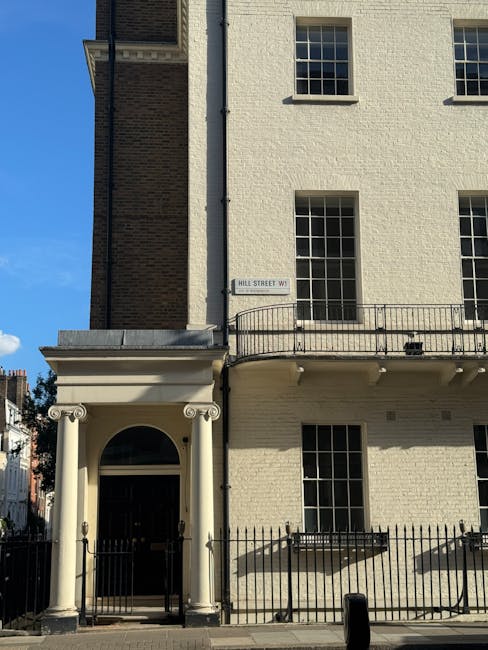
Moving on Marylebone High Street: Narrow-Fronted Property Tips
Moving on Marylebone High Street can feel deceptively straightforward from the outside. The street looks elegant, well-kept, and very walkable. But once you start planning a move in one of those narrow-fronted properties, the reality changes fast. Tight staircases, compact hallways, awkward door swings, shared entrances, and limited loading space can turn a simple relocation into a bit of a puzzle.
That is exactly why Moving on Marylebone High Street: Narrow-Fronted Property Tips matters. If you know how to prepare for the access, the measurements, the timing, and the logistics, the day runs more smoothly. Less stress. Fewer surprises. And, to be fair, far fewer near-misses with a sofa catching on a banister.
This guide walks through the practical side of moving in this part of Marylebone: what makes these properties different, how to plan around the constraints, what to ask a removal team, and how to avoid the common mistakes people only spot when the van has already arrived. If you're also weighing up the wider area, our guide on what it's like to live in Marylebone is a useful companion read.
Table of Contents
- Why Moving on Marylebone High Street: Narrow-Fronted Property Tips Matters
- How Moving on Marylebone High Street: Narrow-Fronted Property Tips Works
- Key Benefits and Practical Advantages
- Who This Is For and When It Makes Sense
- Step-by-Step Guidance
- Expert Tips for Better Results
- Common Mistakes to Avoid
- Tools, Resources and Recommendations
- Law, Compliance, Standards, or Best Practice
- Options, Methods, or Comparison Table
- Case Study or Real-World Example
- Practical Checklist
- Conclusion
- Frequently Asked Questions
Why Moving on Marylebone High Street: Narrow-Fronted Property Tips Matters
Narrow-fronted homes are common in central London, and Marylebone is no exception. They can be beautiful, practical, and full of character, but they also come with a very particular moving profile. The frontage may be slim, while the interior stretches deeper than you expect. Stairs can bend sharply. Landings may be tiny. And the building entrance might be shared with neighbours, customers, or service access.
So why does that matter? Because the removal plan needs to match the property, not just the postcode. A move that would be easy in a modern estate flat can become awkward in a Georgian terrace, a converted townhouse, or a split-level apartment with one-too-many turns.
It also matters for timing. On a street as active as Marylebone High Street, you often need to think about foot traffic, unloading positions, lift access if there is one, and whether a van can park close enough without causing delays. If you are moving furniture, your route from front door to vehicle is just as important as the route from your old address to the new one.
For many readers, the bigger picture is property-led as much as moving-led. If you're buying or investing locally, the area itself is part of the equation. You may find our Marylebone property buying guide and real estate guide for Marylebone useful for understanding why these homes are so sought after, even when they are not exactly mover-friendly.
Key point: the more compact and characterful the property, the more important the planning. That sounds obvious, but in practice people still underestimate it. Then moving day arrives. Then the first wardrobe meets the staircase.
How Moving on Marylebone High Street: Narrow-Fronted Property Tips Works
Think of the move as three connected jobs: assess, prepare, and execute. Each stage matters. Skip one, and the whole thing gets harder.
1) Assess the property properly
Start with a realistic look at the access. Measure door widths, staircase landings, ceiling heights, and any sharp turns. Check whether your biggest items can make the journey without tilt, rotation, or disassembly. If your bed frame or sofa is modular, say so early. If it is not, even more reason to measure carefully.
In narrow-fronted homes, the small details are often the big ones. A few centimetres can decide whether a fridge fits through the hallway or has to be removed another way. This is where a proper survey or at least a detailed walk-through pays off.
2) Prepare the route inside and outside
Inside, clear the hallways, protect floors, and remove loose items that could snag. Outside, think about the pavement, loading bay options, and where the van can safely stop. On busy central streets, a small delay can spiral. A blocked doorway or a poorly timed arrival can make everything feel ten times more stressful than it needs to be.
If you're using local specialists, a service like removals in Marylebone or a smaller-scale option such as man and a van in Marylebone may be a better fit depending on the size of your move. For particularly tight access, the best choice is not always the biggest vehicle. Sometimes it is the most flexible one.
3) Execute with the right sequencing
Good movers load in a planned order. Heavy, awkward, or fragile items are handled with awareness of the exit path first, not as an afterthought. In narrow buildings, the sequence matters because once the hallway is occupied, movement gets slower. A sofa moved first may save you from a jam later on. A mirror moved last may be the one item you wish you had padded more carefully.
There is also the question of help. For flats, older buildings, and tight staircases, experienced teams often bring the right lifting equipment, protective covers, and enough people to move safely. That is not overkill; it is just sensible.
Key Benefits and Practical Advantages
Getting the logistics right for a narrow-fronted Marylebone property has some clear upsides. None are flashy, but they make the day much easier.
- Less risk of damage: careful planning reduces scuffs on walls, chipped paint, and bent furniture.
- Faster loading and unloading: when access is mapped in advance, the team can work without repeated stops and resets.
- Lower stress for everyone: you are not trying to make last-minute decisions on a pavement with a van idling behind you.
- Better protection for neighbours and shared areas: helpful in buildings where hallways and entrances are tight.
- Smarter use of service type: some moves need a full removal crew; others are better suited to a smaller vehicle or targeted help.
There is another benefit people sometimes overlook: confidence. Once you know the move has been planned around the actual shape of the property, it becomes much easier to relax. You are not hoping the banister behaves. You know the plan.
For readers comparing options, our overview of moving services available in Marylebone is a good place to start. If cost is part of your decision, the page on pricing and quotes explains how to approach estimates without guesswork.
Who This Is For and When It Makes Sense
This advice is especially useful if you are moving from any of the following:
- a narrow-fronted townhouse or terrace
- a converted flat with a tight staircase
- a top-floor apartment with awkward internal turns
- a mixed-use building with shared access
- a furnished rental with bulky items to relocate
- an office or studio space with limited loading space
It also makes sense if you are moving out of Marylebone High Street into storage, or moving in after a purchase or tenancy change. In fact, narrow-fronted property tips are useful any time access is not straightforward, which is more often than people think. A lovely address does not automatically mean an easy move. Beautiful neighbourhoods can still have tiny thresholds and awkward turns. City living, eh?
Students and short-term renters may find the logistics lighter but still important, especially if the move includes boxes, desks, or compact furniture. A smaller service like student removals in Marylebone can be a practical fit for that kind of move.
Families, homeowners, landlords, and local businesses all have different priorities, but the same principle applies: match the move to the property's access, not just the inventory list.
Step-by-Step Guidance
Here is the most practical way to handle a move on Marylebone High Street when the frontage is narrow and the access is less forgiving than it looks.
- Do a full access check. Measure the front door, interior doors, hallways, stairwells, landings, lifts, and any external steps. Photograph awkward points. A quick video walkthrough can help a removal team judge the route properly.
- Separate furniture into categories. Keep items that need disassembly, items that are fragile, and items that can move as-is. This prevents chaos later.
- Book the right service level. For smaller loads, a man with van service in Marylebone may be enough. For larger homes or heavily furnished properties, a full house removals approach is usually safer and quicker.
- Plan for parking and arrival. Ask how close the van can get and how loading will be managed if the street is busy. This is the bit that saves time on the day.
- Pack by access priority. Items needed last at the old property should be packed first, and items needed first at the new property should be labelled clearly. The label should say more than just "kitchen." It should say "cutlery drawer," if you want an easy first hour.
- Protect tight-contact points. Use covers on corners, banisters, tabletops, and fragile finishes. Old plaster and narrow stair walls do not forgive careless handling.
- Keep essentials separate. Documents, chargers, keys, medication, snacks, and a kettle if you're sensible. Moving days feel easier when you can make tea without rooting through twelve boxes.
- Do a final walk-through. Check cupboards, under beds, inside airing cupboards, and the back of wardrobes. You would be amazed how often a charger disappears behind something heavy.
One practical note: if the property contains items that need specialist handling, such as a piano or a very large sofa, raise that early. In Marylebone, it is often better to plan for a specialist service than to improvise on the day. For delicate or difficult items, piano removals in Marylebone show the kind of careful handling sometimes needed.
Expert Tips for Better Results
These are the small, practical things that make a big difference.
Use a scale drawing, even a rough one
You do not need architectural software. A hand sketch with basic measurements can be enough to decide whether a wardrobe needs stripping down before moving. Add the length of the longest item and mark the tightest bend. It is not glamorous, but it works.
Think in "turns", not just distances
A 20-metre walk through a narrow hallway may be harder than a 50-metre walk along an open corridor. The number of turns matters. The tighter the property, the more each turn adds risk and time. That is especially true in older buildings where staircases curve a little or the walls are not quite square.
Choose packing materials based on friction, not just fragility
People usually worry about breakables. Fair enough. But in narrow-fronted properties, rubbing damage is just as common. Think padded covers, blankets, and corner guards for items that may brush past walls or door frames. The marks you avoid are often the marks you never budgeted for.
Schedule around local movement patterns
Marylebone can feel busy at different times of day, and the rhythm changes through the week. School runs, commuter flow, delivery windows, and lunch-hour foot traffic can all affect loading. If a choice exists, aim for a time that gives you the calmest access route. Early starts can help. Sometimes not, but often enough.
Keep communication simple on the day
One person should be the point of contact. Too many instructions from too many people causes muddle, and muddle is expensive in time. A calm, clear instruction like "that cabinet needs two people and a sideways turn" saves more trouble than a long discussion mid-stair.
If you are comparing local teams, it is worth reviewing removal companies in Marylebone and checking what they include as standard. A trustworthy provider should be able to explain access planning, protection, and insurance in plain English.
Common Mistakes to Avoid
A lot of moving problems in narrow-fronted properties are predictable. That is the frustrating part. The good news is they are also avoidable.
- Not measuring the route properly. Guessing whether a sofa will fit is a dangerous hobby.
- Forgetting door swing and landing space. A door may be wide enough, but if it opens into a tiny landing, the manoeuvre still fails.
- Booking the wrong vehicle size. Bigger is not always better in central London access. It may create more parking pressure, not less.
- Packing everything into random boxes. Boxes without labels slow down unloading and make it harder to prioritise essentials.
- Leaving disassembly too late. Beds, tables, shelving, and wardrobes often take longer than expected to dismantle and reassemble.
- Assuming the street will be quiet. On a popular high street, assumptions are costly.
- Overfilling boxes. Heavy boxes are harder to carry through tight spaces and can split at the worst moment. Usually the hallway. Naturally.
Another common mistake is ignoring storage as a pressure valve. If you are downsizing, redecorating, or waiting on completion, temporary storage in Marylebone can reduce the stress of trying to move everything in one go.
And if you have old furniture to clear first, it can make the exit route much easier. A specialist furniture removals service may be a better fit than trying to do it all on the same day with no plan.
Tools, Resources and Recommendations
You do not need a van full of fancy kit. But a few tools and resources make narrow-property moves much smoother.
- Measuring tape: for doors, furniture, and tight turns.
- Phone camera or video: to record the access route and show awkward corners.
- Furniture blankets and corner guards: to protect finishes from scuffs.
- Strong labels and marker pens: for box sorting and room destinations.
- Basic toolkit: screwdrivers, Allen keys, and a wrench for furniture dismantling.
- Floor protection: especially helpful in rented or newly finished properties.
For services and planning support, these pages may help you shape the move in a sensible way:
- removal services in Marylebone for a broad overview of support options
- flat removals for apartment and upper-floor access challenges
- packing and boxes in Marylebone if you want packing help or materials
- same-day removals for time-sensitive situations
- competitive prices if budget clarity matters early in the process
One small but useful recommendation: keep a photo of the item list on your phone. On a moving day, that little list can feel like a proper safety net when your brain is full and the corridor is not.
Law, Compliance, Standards, or Best Practice
Moving home or business premises in central London usually does not require you to become an expert in transport law, but there are a few best-practice points worth respecting.
Parking and loading: always check local rules and any building-specific requirements. Marylebone streets can be busy, and poor loading choices can create delays or inconvenience for neighbours. If a removals team is handling the vehicle, they should be familiar with safe loading, timing, and practical access issues.
Insurance and protection: ask what level of cover is included and how items are protected while being moved. You do not need a lecture. You do need clarity. A reputable team should be able to explain their insurance and safety approach clearly and without jargon.
Health and safety: narrow stairs, heavy lifting, and awkward angles create a genuine manual-handling risk. Good practice means proper staffing, sensible lifting, and not forcing oversized objects through spaces that are obviously too tight. If a move looks unsafe, that is usually because it is unsafe. Simple as that.
Waste and disposal: if you are clearing unwanted furniture or appliance items, make sure disposal is handled responsibly. Reuse and recycling are preferable where possible. A service with a clear recycling and sustainability approach is worth a look, particularly if you're decluttering as part of the move.
If you want reassurance about how a provider handles service expectations, company policies, or post-booking concerns, it is worth checking pages such as terms and conditions and complaints procedure. Not because you expect trouble, but because good businesses are usually clear about these things.
Options, Methods, or Comparison Table
Different moves need different approaches. Below is a simple comparison to help you think through the best fit for a narrow-fronted property on or near Marylebone High Street.
| Move type | Best for | Advantages | Watch-outs |
|---|---|---|---|
| Man and van | Small flats, a few items, lighter loads | Flexible, practical, often quicker for compact moves | May not suit very bulky or high-volume moves |
| Full house removal | Family homes, furnished properties, larger inventories | More hands, more equipment, better for complex access | Needs better advance planning and access checks |
| Furniture-only move | Large individual items or partial relocations | Efficient if you only need a few key pieces moved | Route measurements become critical |
| Storage-first move | Delays, downsizing, staged moves, refurbishments | Reduces pressure on moving day | Requires extra coordination and possibly a second move |
In practice, the best option often depends on access more than volume. A small load in a very awkward building can be harder than a bigger load in a straightforward one. That is a useful mental shortcut when you are deciding what to book.
Case Study or Real-World Example
Picture a couple moving from a narrow-fronted flat just off Marylebone High Street into a nearby larger apartment. On paper, it looked simple. Same area, only a short journey, not much furniture. But the building had a slim entrance, a tight staircase, and a sofa that had been fine in the old place for years but had never been tested on a right-angle landing.
Instead of waiting until moving day to find out, they sent photos of the route, measured the hall and staircase, and flagged the sofa dimensions early. The removal team arrived with the right covers, a plan for the larger items, and a smaller vehicle that could stop without causing unnecessary hassle. One wardrobe came apart. The sofa required a careful turn and a bit of patience. Nothing dramatic. No damage. No shouting. Which, on a moving day, is already a quiet victory.
What helped most was not strength. It was preparation.
They also booked a small amount of temporary storage for a few pieces they were not ready to place yet, which gave them breathing room after the move. That is often the overlooked part of a smooth relocation: the ability to move in stages instead of forcing every decision into one tired afternoon.
If the move involves a mix of home and business items, a more tailored service such as office removals in Marylebone or a flexible local team through home moves can be worth considering, depending on how much lifting and sorting is involved.
Practical Checklist
Use this before the move. It is simple, but it catches the things people forget when they are busy.
- Measure all doors, hallways, stairs, and landings.
- Check whether any furniture needs disassembly.
- Photograph awkward access points and shared entrances.
- Confirm where the vehicle can load and unload.
- Reserve parking or access permissions if needed.
- Label boxes by room and priority, not just by category.
- Pack one essentials bag with keys, documents, chargers, and toiletries.
- Protect floors, corners, and delicate surfaces.
- Keep valuables and important papers with you.
- Tell the removals team about anything unusually heavy, fragile, or awkward.
- Arrange storage if completion dates or access times are uncertain.
- Do a final walkthrough before the van leaves.
Expert summary: narrow-fronted properties are not difficult because they are small. They are difficult because the margins for error are small. The right measurements, the right route, and the right moving method turn a stressful day into a manageable one.
Conclusion
Moving on Marylebone High Street is all about respecting the building as much as the address. Narrow-fronted properties can be charming, valuable, and surprisingly tricky to move through if you do not plan for the access. But with good measurements, sensible packing, and a removal approach matched to the property, the whole process becomes much more predictable.
The main thing is not to wing it. The second main thing is not to assume the widest route is the best route. Sometimes the smartest move is the smaller vehicle, the calmer schedule, or the decision to disassemble that one awkward piece before anyone starts sweating on the stairwell.
If you are still comparing options, reviewing local support, or just trying to work out the right next step, take a look at the relevant service pages and ask for guidance early. A bit of planning now can save a lot of faff later. And honestly, that is worth a lot on a busy London street.
Get a free quote today and see how much you can save.
For a smoother, calmer move, trust the prep, trust the measurements, and trust the process. The rest tends to fall into place.
Frequently Asked Questions
What makes moving on Marylebone High Street different from other London moves?
The main difference is the combination of narrow-fronted buildings, busy street conditions, and older property layouts. Even a short move can need careful planning because access is tighter and loading space may be limited.
How do I know if my furniture will fit through a narrow hallway or staircase?
Measure the furniture at its widest points and compare that with the narrowest access point, including turns and landings. If the item is large, curved, or awkwardly shaped, it may need to be dismantled or moved with specialist handling.
Should I choose a man and van or a full removals service?
It depends on the size of the move and the access. A man and van service can suit smaller loads, while full removals are usually better for larger homes, more furniture, or tricky stair access.
Do I need storage for a Marylebone move?
Not always, but storage is useful if completion dates are uncertain, if you are downsizing, or if the new property is not ready for everything at once. It can also make a narrow-fronted move less pressured.
What should I tell the removal company before moving day?
Share measurements, photos, parking information, the number of floors, any tight turns, and any items that are especially heavy or fragile. The more accurate the access details, the better the plan.
Can narrow-fronted properties damage furniture more easily?
Yes, mainly because of close contact with walls, doors, and banisters. With proper padding, careful lifting, and route planning, the risk is much lower.
Is parking a major issue around Marylebone High Street?
It can be. Central London streets are often busy, so loading arrangements should be discussed in advance. A removal team familiar with the area will usually know how to work around that.
What is the best way to pack for a property with tight access?
Use strong boxes, keep them manageable in weight, and label them clearly. Pack by priority and room, and avoid overfilling boxes because they are harder to carry through narrow spaces.
Are there special considerations for older buildings?
Yes. Older buildings often have steep stairs, uneven floors, delicate finishes, and less forgiving corners. They can still be moved safely, but the team needs to plan for them properly.
How far in advance should I book a move in Marylebone?
As early as you can, especially if your move involves a busy street, a larger property, or specialist items. Early booking gives you more choice and more time to plan access details.
Can a removal team handle fragile or valuable items in a narrow-fronted property?
Yes, provided they know about them in advance and have the right protection in place. For particularly delicate items, ask whether specialist packing or dedicated handling is available.
What if my move is last-minute?
Then simplicity matters even more. Focus on essentials, avoid unnecessary furniture, and ask about a flexible local service such as same-day support if time is tight. A small, well-managed move is often better than a rushed big one.
How do I keep the move calm on the day?
Have one point of contact, keep the route clear, and make sure the essentials are separate from the general boxes. Calm planning before the move usually creates calm on the move itself.
Where can I compare local service options and pricing?
Start with the service overview, then look at pricing and quote pages so you can compare what is included. If you want a broader view of the local moving landscape, the Marylebone area guides are helpful too.